NCAA Women's Bowling vs. USBC Collegiate Club Bowling: What's the Real Difference?
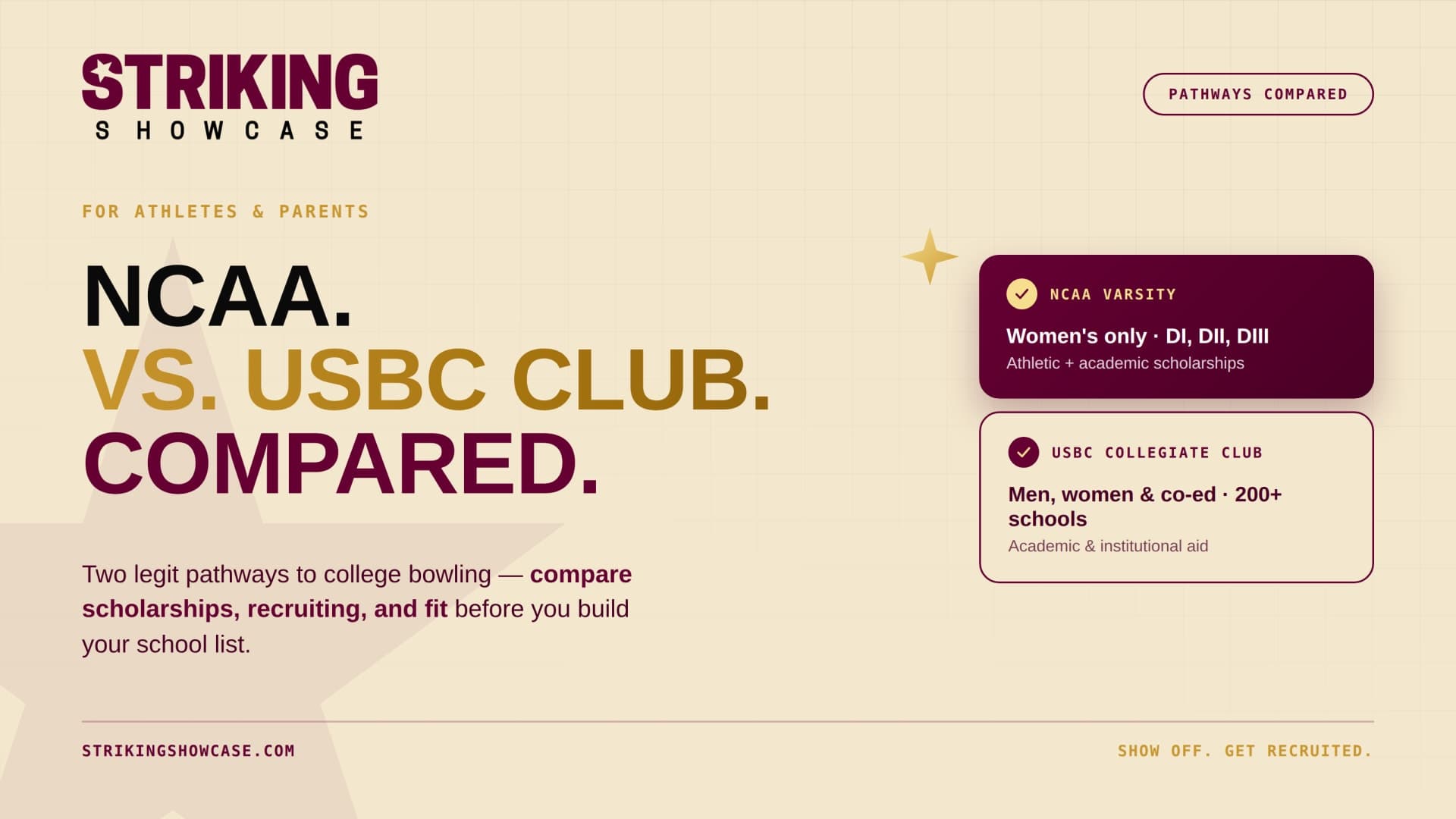
Ask ten bowling families how college bowling is organized, and you'll probably get ten different answers. College bowling is structured differently than most NCAA sports, which can make the recruiting process confusing for athletes and parents. Terms like "varsity," "club," "championship," and "scholarship" often mean different things depending on the program.
If you're researching NCAA vs USBC collegiate bowling, understanding these differences can help you build a smarter college list, communicate with the right coaches, and make better recruiting decisions.
The Core Difference, in One Sentence
USBC Collegiate is run by the United States Bowling Congress and includes men's, women's, and co-ed programs at schools across the country.
Both are legitimate. Both crown national champions. Both have stars who go on to bowl at the highest professional level. But they operate under different rules, with different funding models, different recruiting timelines, and different ceilings.
How They Stack Up
FeatureNCAA Women's BowlingUSBC Collegiate ClubGenderWomen's onlyMen's, women's, and co-edGoverning bodyNCAAUSBCAthletic scholarships? Yes (rules changed in 2025; see our scholarship breakdown) No — academic & institutional aid onlyNational championshipNCAA Women's Bowling ChampionshipUSBC Collegiate Club ChampionshipsNumber of programs~80200+Roster sizeTypically 8–12Typically 10–16Season lengthFall + springFall + springRecruiting calendarNCAA recruiting rules applyLess formal — open communication
While these differences are helpful, remember that choosing the right program isn't just about NCAA versus USBC. Your academic goals, bowling ability, preferred campus environment, and recruiting opportunities should all play a role in your decision.
Funding and Scholarships
This is where the divide is biggest.
NCAA Women's Bowling programs are funded by their schools as varsity athletics, with athletic departments providing budgets for travel, equipment, coaching staff, and scholarships. Coaches recruit using up to five "equivalency" athletic scholarships, which they split across the roster.
USBC Collegiate Club programs — men's and women's alike — are funded differently. Sometimes by the school as a recognized club sport, sometimes through booster funds, alumni, fundraising, or even player dues. Scholarships still exist, but they come from academic merit aid, departmental scholarships, institutional grants, and sometimes endowed bowling-specific funds — not from an NCAA athletic budget.
For families, the practical takeaway is this: ask every coach where the money comes from. During the recruiting process, don't hesitate to ask coaches about available academic aid, institutional grants, bowling-specific awards, and scholarship renewal requirements. Understanding the complete financial picture can make comparing schools much easier and it helps to know how NCAA scholarship rules changed in 2025. A USBC Collegiate Club program with strong academic-aid leverage can offer a financial package that rivals or exceeds an NCAA athletic offer. And an NCAA program with limited scholarship budget might offer less than you'd expect.
How They're Recruited
NCAA Women's Bowling follows NCAA recruiting rules — official visits, contact periods, signing days, and the National Letter of Intent. Coaches at this level can have very deep recruiting pipelines and look closely at Junior Gold, Storm Youth Championships, USBC Youth Open, and state high school results.
USBC Collegiate Club recruiting is more open and more relationship-driven. Coaches can talk to recruits earlier and more freely. Top programs recruit nationally on both the men's and women's sides — including powerhouse women's USBC Collegiate Club programs that compete for the same elite talent NCAA programs do — but the process is less regulated, and timing matters less than rapport.
Because recruiting timelines differ between NCAA Women's Bowling and USBC Collegiate Club programs, athletes benefit from creating a recruiting profile early. Having tournament results, academic information, and videos organized allows coaches to evaluate prospects more efficiently throughout the recruiting cycle.
The Quality-of-Play Question
Here's something families don't always realize: the level of competition at the top of USBC Collegiate Club rivals or exceeds many NCAA programs. Multiple Team USA members, PBA Tour players, and professional women bowlers came up through USBC Collegiate Club programs — on both the men's and women's sides.
So "club" doesn't mean "lesser." It means "differently governed."
If you're a male bowler, you have three pathways to consider: NAIA programs, NJCAA junior college programs, and USBC Collegiate men's and co-ed programs. NAIA and NJCAA programs can offer athletic aid, so don't leave them off your list.
Which Side Should a Family Focus On?
If you're a female bowler, build a school list that includes NCAA Women's Bowling programs and USBC Collegiate Club women's and co-ed programs. Don't narrow yourself to NCAA-only just because the word "varsity" sounds more impressive. Some of the best women's bowling experiences in the country happen at strong USBC Collegiate Club programs.
If you're a male bowler, NCAA bowling isn't an option, but college bowling absolutely is. Build a list that includes NAIA, NJCAA, and USBC Collegiate programs. Between the three, you'll find roster spots, athletic and academic aid, and a place to compete at every academic level.
Start by researching programs that match your academic interests and bowling goals instead of focusing only on program labels. A strong relationship with the coaching staff and the right financial package often matter more than whether a school competes under NCAA or USBC governance.
How Striking Showcase Helps Athletes Explore Both Pathways
Whether you're pursuing NCAA Women's Bowling or USBC Collegiate Club opportunities, staying organized throughout the recruiting process is essential.
A recruiting profile allows coaches to review your tournament history, academic achievements, videos, and contact information in one place. It also makes it easier to communicate with programs that match your goals and skill level.
Rather than limiting yourself to one pathway, building visibility across multiple college programs can create more recruiting opportunities.
The Bottom Line
NCAA Women's Bowling and USBC Collegiate Club Bowling aren't competitors. They're two parallel ecosystems serving different athletes, with different rulebooks and different funding models. Once your family understands the difference, recruiting decisions get a lot simpler — because you stop comparing the wrong things.
Want to be recruited by programs on both sides? Build a Striking Showcase profile coaches across NCAA and USBC Collegiate Club use the platform to find their next class.
Frequently Asked Questions
Is NCAA bowling better than USBC Collegiate Club?
Neither pathway is universally better. NCAA Women's Bowling offers varsity athletics and athletic scholarships, while USBC Collegiate Club provides opportunities for both men and women through club-based programs. The best choice depends on your academic goals, recruiting opportunities, and financial aid package.
Can men compete in NCAA bowling?
No. NCAA bowling is currently a women's championship sport. Men bowl in college at NAIA, NJCAA, and USBC Collegiate programs.
Do USBC Collegiate Club teams offer scholarships?
They don't award NCAA athletic scholarships, but many schools provide academic scholarships, institutional aid, grants, and bowling-specific funding opportunities.
Can women choose between NCAA and USBC Collegiate Club?
Yes. Female athletes can pursue opportunities in NCAA Women's Bowling as well as women's or co-ed USBC Collegiate Club programs.
Which pathway gives better recruiting opportunities?
Both pathways recruit talented athletes. Expanding your college list and connecting with coaches across NCAA and USBC Collegiate Club programs often provides more opportunities than focusing on only one option.