What College Bowling Coaches Watch For at Junior Gold
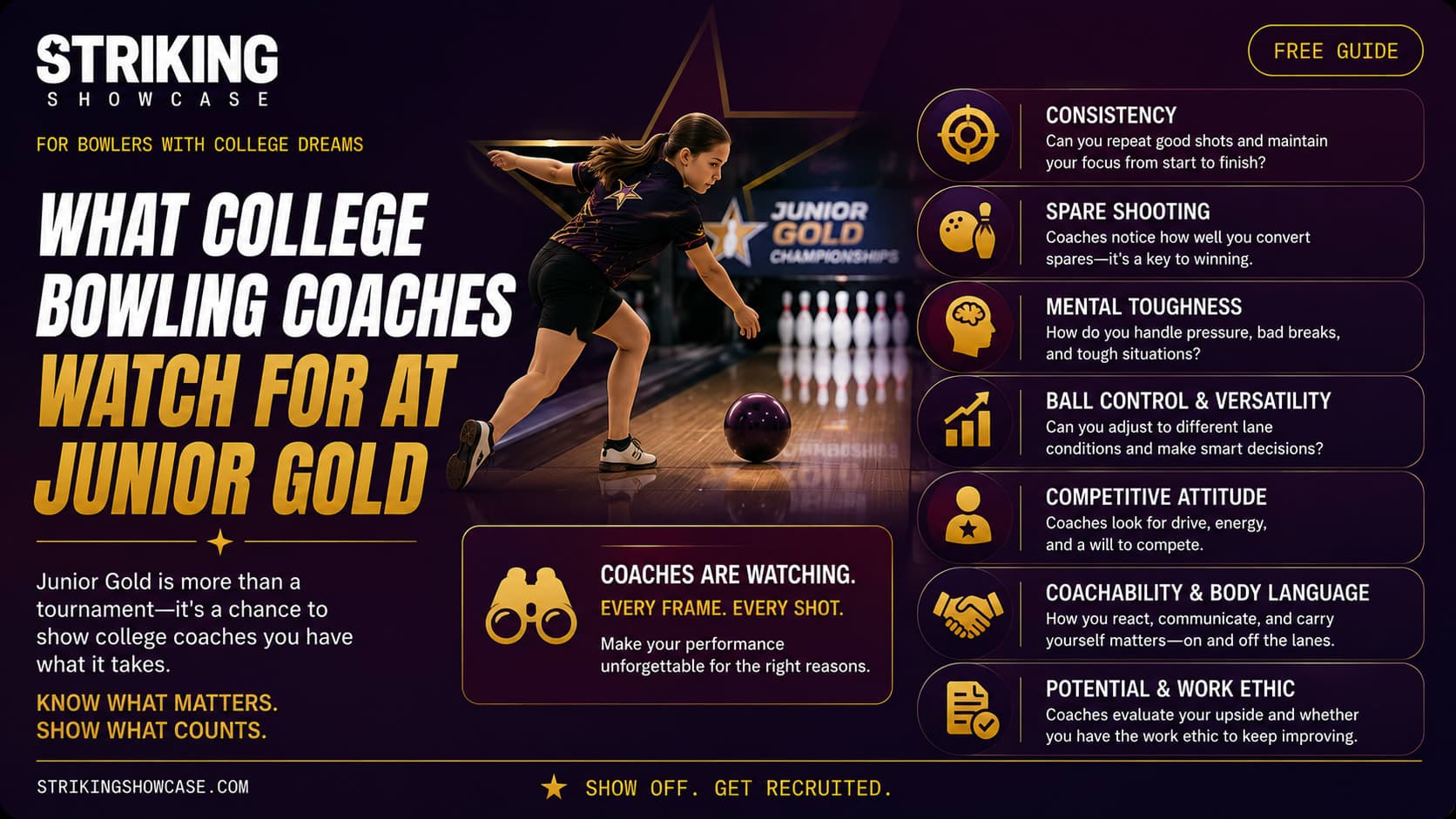
Junior Gold is the largest in-person scouting event of the year for college bowling coaches. Some attend the entire week. Others fly in for specific days. Either way, they're watching and they're watching for things most bowlers don't realize matter.
Your average gets them to notice you. Everything else determines whether they actually recruit you.
They Already Know Your Numbers
Before a coach ever sees you bowl, they've checked your USBC record, scanned the bracket, and probably looked at your average from the past season. Numbers got you here. They don't impress a coach in the moment.
What they're doing in the bleachers is verifying whether you actually look like the bowler your numbers suggest and whether you're someone they want on their team.
Composure on a Bad Shot
This is the single biggest thing coaches watch for, and most bowlers don't realize it.
Coaches don't pay attention to your reaction after a strike. They pay close attention to your reaction after a missed spare, a split, a bad break, or a moment where the lane transition surprises you. The bowler who responds to a bad shot by adjusting calmly, walking back composed, and approaching the next shot with the same routine is the bowler coaches want.
The bowler who throws their towel, slams the ball return, or sighs loudly is the bowler coaches cross off the list even if their average is high.
Spare Game
Strike count is sexy. Spare conversion is what wins college matches.
College coaches will watch how you handle the 7 pin, the 10 pin, the bucket, the split, and the washout. They're looking for repeatable mechanics on every spare not just the easy ones. A bowler with a 215 average and a 78% single-pin conversion rate is more valuable to a college team than a 220 bowler with a 70% rate.
Lane Play and Adjustability
Junior Gold runs different patterns block to block. Coaches are specifically watching how you adjust between blocks. Do you carry the same line into the second block and fall apart? Or do you read the pattern, change your launch angle, switch balls, and re-establish?
Adjustability is the single most-discussed trait in coaches' conversations after a session. They want bowlers who can think on the lanes.
How You Treat Other Bowlers
Coaches watch interactions during pace play, between frames, and in the practice area. They watch:
How you treat opponents after a great shot
How you treat opponents after a bad shot
How you act in the bullpen
How you handle teammates if you're bowling with friends
How you respond to volunteer staff, lane officials, and other parents
A college team is a small environment. Coaches recruit character because they know they'll be traveling, eating, practicing, and living with you for four years.
How You Handle Parents
This is the awkward one but coaches notice. If your parent is yelling at you between frames, micromanaging from the bleachers, or talking down to staff, coaches see it. They don't want it on their team's bench either.
Bowlers whose parents stay quiet and supportive get a competitive advantage they don't even realize.
What They're Not Watching For
Coaches genuinely don't care about:
Whether your equipment matches
What brand of shoes you wear
How "cool" your bag setup looks
Highlight-reel celebrations after strikes
Speed of play (within reason)
Be yourself. Bowl your game. The signals that matter are mostly about who you are between the shots.
The Bottom Line
College coaches at Junior Gold are evaluating the whole athlete: composure, spare game, adjustability, character, and how you'd fit into a four-year team environment. The bowlers who get recruited from Junior Gold aren't always the ones with the highest scores they're the ones who show coaches the right things in the right moments.
Want coaches to remember your name after Junior Gold? Build your Striking Showcase profile so when they look you up after watching you bowl, they find everything they need.
Frequently Asked Questions
What's the single biggest thing college coaches watch for at Junior Gold?
Composure on a bad shot. Coaches pay closer attention to how you respond to a missed spare or bad break than how you react after a strike a calm, repeatable reset matters more than raw emotion.
Does my average still matter if coaches already have my numbers?
Your average gets you noticed before they arrive, but in person coaches are verifying whether you look like the bowler your numbers suggest, and evaluating everything else composure, spares, adjustability, and character.
Why do coaches care so much about spare shooting?
Strikes are exciting, but spare conversion is what wins college matches. A bowler with a lower average but a higher single-pin conversion rate is often more valuable to a college program than a bigger average with weaker spare mechanics.
What does "adjustability" mean to a college coach?
It means how well you read and react to a lane pattern changing block to block switching your line, launch angle, or ball rather than forcing the same shot that worked on a different pattern.
Do coaches care about equipment or bag setup?
No. Coaches aren't evaluating what balls or shoes you use, how coordinated your gear looks, or how you celebrate strikes. They're watching who you are between shots, not your setup.
Can my parents' behavior affect how coaches see me?
Yes. Coaches notice if a parent is yelling, micromanaging from the stands, or talking down to staff and it reflects on the bowler. Parents who stay quiet and supportive give their bowler a real advantage.